


-

Add: HeBei ShengShi HongBang Cellulose Technology CO.,LTD.
-

Email
13180486930@163.com -

CONTACT US
+86 13180486930



Hydroxypropyl methylcellulose (HPMC) is widely recognized as a versatile compound that finds its application across various industries. Preparing HPMC solutions is paramount for ensuring its effective performance, whether in pharmaceuticals, food processing, or construction. This article sheds light on the expertise required, authoritative guidelines, and trustworthy methodologies associated with HPMC solution preparation. Experience in HPMC solution preparation reveals that the process is both an art and a science, demanding precision and knowledge. Users often face challenges such as insolubility, clumping, or achieving the desired viscosity. These challenges can be mitigated by following specific preparation steps . Here, I will share a streamlined process derived from years of hands-on experience 1. Selection of Grade The choice of HPMC grade significantly influences the end properties of the solution. Different grades offer varying viscosities and gel temperatures, making it crucial to consult technical specification sheets provided by manufacturers to select the right grade for your application needs. 2. Water Quality The quality of solvent, usually water, plays a critical role. Using deionized or distilled water enhances solubility and prevents any potential reactions from contaminants. Experience confirms that temperature-controlled environments boost the solubility rate and uniformity of HPMC throughout the solution. 3. Dispersion Technique Accurate dispersion ensures the complete hydration of HPMC without forming clumps. Begin by sprinkling HPMC slowly into the solvent while stirring continuously. An authoritative tip involves using mechanical stirrers to maintain a consistent dispersal, achieving a lump-free solution efficiently. 4. Temperature Control The temperature of the solvent should be monitored closely. HPMC tends to dissolve better in cold water. By initially employing cold water to disperse the HPMC and later heating it up if the application demands a higher temperature, one can secure optimal results. hpmc solution preparation 5. Hydration Time Time is a crucial factor in preparing an HPMC solution. Allow the solution to hydrate fully, which might take several hours depending on the grade and environmental conditions. Patience is key as incomplete hydration could result in suboptimal solution properties. 6. pH Adjustment For applications requiring specific pH levels, adjust the pH of the solution after full hydration. Different grades of HPMC might react differently to pH adjustments, so it's advisable to conduct small-scale tests before full-scale operations. From a professional standpoint, the expertise of troubleshooting common issues cannot be overstated. In some cases, adding a non-ionic surfactant can assist in reducing surface tension and improving solubility. Furthermore, employing an industrial homogenizer can yield a finer, more consistent HPMC solution in high-demand applications. To establish authority in the preparation of HPMC solutions, it’s paramount to adhere to standardized practices as endorsed by industry leaders. Following guidelines from entities like the United States Pharmacopeia (USP) can ensure compliance and efficacy in pharmaceutical applications. Maintaining a record of every batch's preparation details ensures traceability and identifies areas for future optimization. Trustworthiness is built through consistency and transparency. Regularly testing and documenting the rheological properties of prepared solutions guarantees batch-to-batch uniformity. For enhanced credibility, consider third-party verification from accredited laboratories to validate the effectiveness and safety of the final solution. In conclusion, HPMC solution preparation demands a blend of practical experience, specialized knowledge, and adherence to authoritative protocols. By following these best practices, one can ensure the creation of high-quality HPMC solutions suitable for a variety of applications, ultimately fostering trust and reliability in the end product.
- 40000tons

Production
- 20+years

Experience
- 5000+㎡

Acreage

-
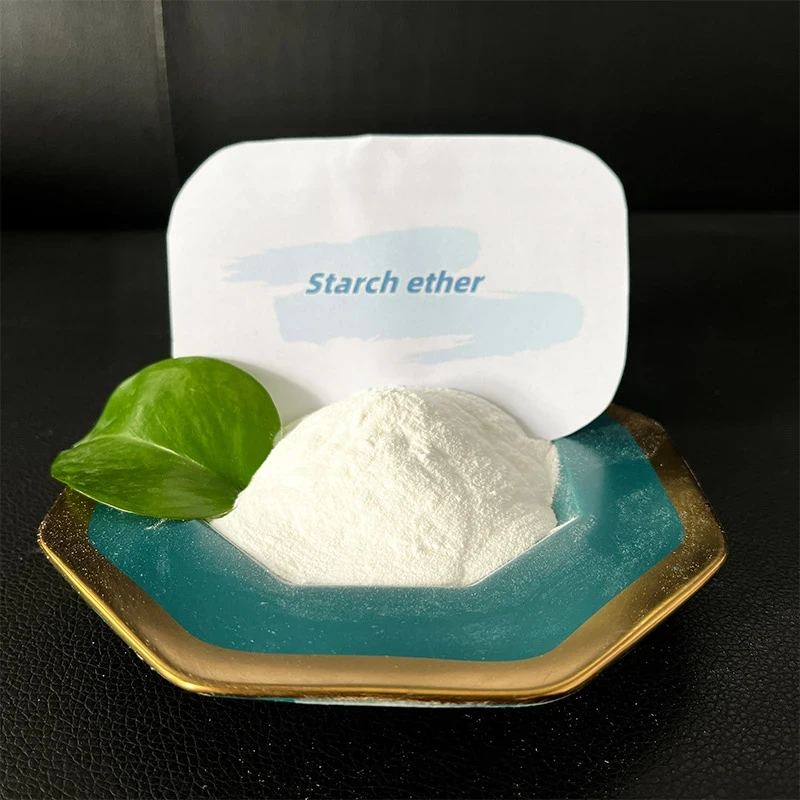
Starch ether has rapidly become a vital additive in dry mortar technologies, especially for tile adhesive, skim coat, and self-leveling compounds. Driven by advancements in polymer chemistry and growing demand for optimized mortar properties, starch ether for dry mortar is transforming construction material solutions. Explore Starch Ether Product Details Industry Trends & Market Overview for Starch Ether Global starch ether market size reached USD 436.7 million in 2023, projected at a CAGR of 5.8% through 2029 (Source: IMARC Group). Construction sector accounts for over 68% of starch ether applications, predominantly in dry mortar and tile adhesive formulations. Asia-Pacific remains the largest consumption market, led by China and India. Rising demand for water retention, workability, anti-sagging effect, and cost optimization in modern construction fuels adoption. Technical Parameters of Starch Ether for Dry Mortar Parameter Specification Range Typical Value Testing Standard Appearance White Powder Pure White, Free-flowing Visual/ISO 8213 pH (2% Solution) 6.0 – 8.0 7.2 ISO 976 Moisture Content (%) <10.0 6.5 ISO 585 Viscosity (mPa.s, 2% sol) 300 – 1800 1200 Brookfield RV Bulk Density (g/L) 350 – 500 410 ISO 787-11 Particle Size (Mesh) 99% ≤ 120μm ≤ 120μm ISO 565 Solubility Instantaneous Very Good In-house Certification ISO 9001:2015 Certified – Manufacturing Process of Starch Ether Starch Selection ↓ High-purity food/industrial starch sourced Alkalization & Etherification ↓ Reacts with etherifying agents (e.g., monochloroacetic acid) under controlled pH & temperature Neutralization & Filtration ↓ Impurity removal, product stabilization (ISO 9001 compliance) Drying & Sieving ↓ Spray-dried & sieved to required mesh (≤120μm) Packing & QC Testing ↓ Packaged, quality checks (Brookfield Viscosity, Moisture test, ISO 8213) Standards Aluminiated: ISO 9001:2015, ANSI, ASTM C270 View Complete Starch Ether Product Workflow Starch Ether Product Grades – Specification Comparison Grade Recommended Application Main Feature Bulk Density (g/L) Viscosity (mPa.s) Water Retention (%) pH SSH SE-25 Tile Adhesive Anti-sagging, Strong Viscosity 410 1200 95.5 7.2 SSH SE-30 Self Levelling & Skim Coat Good Flow & Smooth Finish 400 1400 97 7.1 General Brand D Plaster Mortar High Workability 415 1100 94 7.0 Leading Brand E Tile Grout Easy Mixing 390 1000 94.7 6.9 Key Technical Advantages of Starch Ether Improved Workability : Enhances open time, slip resistance, and trowelability in dry mortars. Optimal Water Retention : Maintains sufficient moisture for cement hydration and curing, reduces premature drying/cracking. Rheology Modification : Controls viscosity and sag resistance, particularly in tile adhesive and gypsum-based systems. Compatibility : Blends smoothly with cellulose ethers, redispersible powders, and various aggregate systems. Cost-effective : Low dosage (0.03–0.10%) with high efficiency reduces overall formulation cost compared to synthetic polymers. Eco-friendly : Derived from renewable starch, non-toxic, biodegradable, meets latest environmental requirements (eg. EU Reach & FDA clauses for indirect food contact). Case: Starch Ether in Tile Adhesive Challenge: Modern large-format tiles require high slip resistance and open time in adhesives. Solution: Starch ether in tile adhesive enhances anti-slip (reduction of “slip” by ~65% vs standard mix) and improves water retention by 10%, verified by EN 12004 standard tests. Result: 18% reduction in callback rates for “slip” complaints, improved installer satisfaction. Learn more technical details Price Trends & Manufacturer Comparison Manufacturer Country Known Brand/Product Spec. Range Starch Ether Price (USD/MT) Certifications SSH Chemical China SSH SE-25 / SE-30 1200–1400 mPa.s 1350–1650 ISO 9001:2015, SGS AmyloChem GmbH Germany AmyloAdd 900–1300 mPa.s 1700–2100 ISO 9001 ChemStarch Turkey STARCHEA 1000–1600 mPa.s 1400–1800 ISO 9001 SinoSR China SR-Ether 1100–1500 mPa.s 1400–1690 ISO, SGS India Polymers India IndiStar 950–1450 mPa.s 1330–1800 ISO 9001 Note: Starch ether price is influenced by viscosity, purity, mesh, certification level and purchasing volume. For customized quotes, contact SSH Chemical . Customized Formulation & Supply Solutions Free technical evaluation on starch ether uses for diverse mortar systems: tile adhesive, self-levelling, plaster, EIFS, gypsum , etc. Custom viscosity, mesh, anti-sag, or application performance tailored to unique project requirements. Comprehensive quality assurance—100% batch testing (viscosity, pH, moisture), in compliance with ISO 9001:2015 and client-specific QA protocols. Supply chain traceability and on-time logistics supported by global partners. Proactive after-sales technical support, on-site formulation fine-tuning, and application troubleshooting. Request a Custom Starch Ether Quote Typical Application Scenarios: Starch Ether Technical Use Cases 1. Cement-based Tile Adhesive Function: Rheology control, anti-slip, open time extension Formulation: 0.025–0.08% starch ether , 0.2% cellulose ether Certification: EU EN 12004, ISO 13007-1 Advantage: Enhanced workability, fault-free installation of large-format tiles 2. Self-leveling Underlayment Function: Smoothing flow, anti-segregation Recommended Grade: SSH SE-30, 0.04–0.1% dosage Standard: ASTM C1708 (US), ISO 13007 Result: Smoother finish, reduced trowel marks, improved surface strength 3. Premixed Plaster/Skim Coat Function: Workability, spray-ability Key Feature: Enhanced cohesion and spread Compliance: ISO 11127 Result: Higher productivity, better adhesion to substrates 4. Gypsum Board Joint Filler Function: Sag resistance, smoothness Dosage: 0.03–0.07% Standard: ASTM C475/ASTM C1396 Advantage: Excellent anti-shrinkage, no hairline cracks 5. Exterior Insulation Mortar (EIFS/ETICS) Function: Water retention, anti-cracking Key Value: Weather resistance, extended system life Standard: EN 998-1 Benefit: Improved durability and cost performance Quality Commitment & Support Services All starch ether products are tested to ISO 9001:2015 and SGS verification standards. Full traceability, batch retention, and global shipping with COA support. Lead time: Regular 7–14 days ex-works after order confirmation. Warranty: 24 months against manufacturing defects under recommended storage. Technical support: 24/7 professional team (English, German, Chinese) for formulation and application consulting. Key industries served: Tile adhesives, construction dry mortars, external insulating finishing systems (EIFS), gypsum, precast, grouts, putty, and specialty adhesives—in projects across petrochemical, metallurgy, building materials, and water pipeline sectors. FAQs: Professional FAQ on Starch Ether 1. What is the raw material base and why is it important? Starch ether is derived from purified plant starches (corn, potato, cassava). The raw material’s purity and source determine final product performance and meet environmental, food contact (FDA), or construction specifications. 2. What are typical mesh sizes & why does it matter? Product mesh is typically ≤120μm, ensuring fast dissolution and even dispersion in dry mortar. Finer mesh achieves optimal workability and eliminates streaking. 3. What is the recommended starch ether dosage? Usually between 0.03–0.1% of total mortar dry mass, depending on application. Higher dosage may be needed for enhanced anti-slip or flow properties. 4. What international certifications should I look for? Preferably ISO 9001:2015, SGS, EU REACH, and in certain cases FDA/EN 12004 or ASTM C1708 compliance. 5. How is shelf life validated? Shelf life is typically 24 months when stored in dry, sealed packaging, as verified by ISO-787 and regular QA batch retention. 6. How does starch ether interact with cellulose ether? Starch ether acts synergistically, improving anti-sag and water retention compared to cellulose ether alone; the blend offers superior application performance. 7. Can you provide third-party test data? Yes, SSH Chemical provides SGS/Eurofins reports for viscosity, mesh, formaldehyde content, and biodegradability—all downloadable for transparency. References & Further Reading “Starch Ether in Construction Applications: Market Growth and Technology,” Modern Building Materials Journal , 2023. ( ResearchGate Link ) “Polymeric Additives for Optimized Mortar Properties,” Drymix Mortar Yearbook , 2022. ( Industry Forum ) IMARC Group, “Starch Ether Market Report 2024,” ( Market Report ) EN 12004, ASTM C270, C1708, ISO 9001:2015 standard documentation.
-

The Rise of Manufactured Synthetic Fibers Transforming the Textile Industry In today’s modern world, the textile industry has witnessed a remarkable transformation brought about by the advent of manufactured synthetic fibers . Synthetic fibers, which are man-made through chemical processes, have revolutionized the way we think about clothing, textiles, and consumer goods. These fibers, which include polyester, nylon, and acrylic, have become ubiquitous, influencing fashion, design, and even sustainability practices. Manufactured synthetic fibers emerged in the early 20th century, with the invention of rayon in 1910 marking the beginning of a new era in textiles. Following this, the development of nylon by Wallace Carothers in 1935 represented a pivotal moment; it was the first completely synthetic fiber and played a significant role in affecting various industries, most notably in clothing and military applications during World War II. The post-war boom further popularized synthetic fibers, leading to their widespread acceptance and extensive use. One of the most compelling advantages of synthetic fibers is their durability. Unlike natural fibers, synthetic options tend to be more resistant to wear and tear, moisture, and environmental factors. This durability translates into longer-lasting products, which can be particularly beneficial in applications ranging from outdoor gear to industrial use. For instance, the application of polyester in the production of athletic wear has led to the creation of garments that can withstand rigorous activity while providing comfort and breathability. Moreover, synthetic fibers can be engineered to meet specific requirements. For instance, manufacturers can adjust properties like elasticity, moisture-wicking ability, and thermal insulation to cater to consumer needs. This customization makes synthetic fibers an appealing choice for many brands eager to offer innovative textiles. In the fashion industry, this versatility allows for the creation of striking designs with vibrant colors that remain intact through multiple washes, unlike some natural fibers that may fade over time. manufactured synthetic fibers However, the rise of manufactured synthetic fibers has not come without drawbacks, particularly concerning environmental impacts. The production of synthetic fibers is often energy-intensive and can contribute to pollution if not managed properly. Additionally, synthetic fibers are derived from petrochemicals, raising concerns about sustainability and dependence on fossil fuels. The pressing problem of microfibers shedding from synthetic garments during washing has also gained attention, as these tiny particles enter water systems and pose a threat to marine life and ecosystems. In response to these challenges, the industry is actively exploring solutions aimed at reducing the environmental footprint of synthetic fibers. Innovations in recycling technologies have made it possible to reclaim and reuse polyester from discarded garments. Companies like Patagonia and Adidas are leading the way by launching initiatives to incorporate recycled synthetic fibers into their products. By transitioning to a circular economy model, the fashion industry can reduce waste and lessen the reliance on virgin materials. Furthermore, advancements in bio-based synthetic fibers are gaining traction as an alternative to traditional petrochemical-based options. Brands are increasingly investing in research to develop fibers synthesized from renewable resources, such as algae or agricultural by-products. These bio-based synthetics promise to provide the benefits of traditional fibers while significantly reducing the environmental impact. Consumer awareness is an essential driver of change in this sector. As sustainability becomes a key factor in purchasing decisions, consumers are more equipped than ever to demand transparency from brands regarding their fiber sources and manufacturing processes. This shift is prompting many businesses to re-evaluate their practices, thus fostering a more sustainable textile industry. In conclusion, manufactured synthetic fibers have undeniably altered the landscape of textiles, offering unprecedented benefits in terms of durability, versatility, and innovation. However, this evolution comes paired with environmental challenges that require urgent attention. By increasing awareness and embracing sustainable practices, the textile industry can work towards a future where synthetic fibers continue to play a vital role while minimizing their ecological footprint. The dialogue surrounding this balance of innovation and sustainability is crucial as we move forward, striving for a responsible and forward-thinking approach to textiles that benefits both consumers and the planet.
advantages
-

200000 Viscosities
Excellent product
We can produce pure products up to 200,000 viscosities
-

40000 tons
High yield
We don’t stop production all year round, and the annual output can reach 40,000 tons
-

24 hours
Quality service
We provide 24-hours online reception service, welcome to consult at any time
———— Inquiry Form
Schedule A services

-
 hydroxypropyl_methylcellulose_use
Oct . 25, 2025
In the rapidly evolving world of pharmaceutical and health supplement manufacturing, the demand for -
 whole_sale_
Oct . 25, 2025
Hydroxypropyl methyl cellulose (HPMC) significantly influences the properties of cement mortar, part -
 hpmc_for_putty_powder
Oct . 25, 2025
Understanding HPMC Adhesive for Tiles An In-Depth Overview Tile installation is a critical aspect of


